
Blog
Why Choose Australian Supplier COBRA for Comet-Compatible Gas Torch Handles?

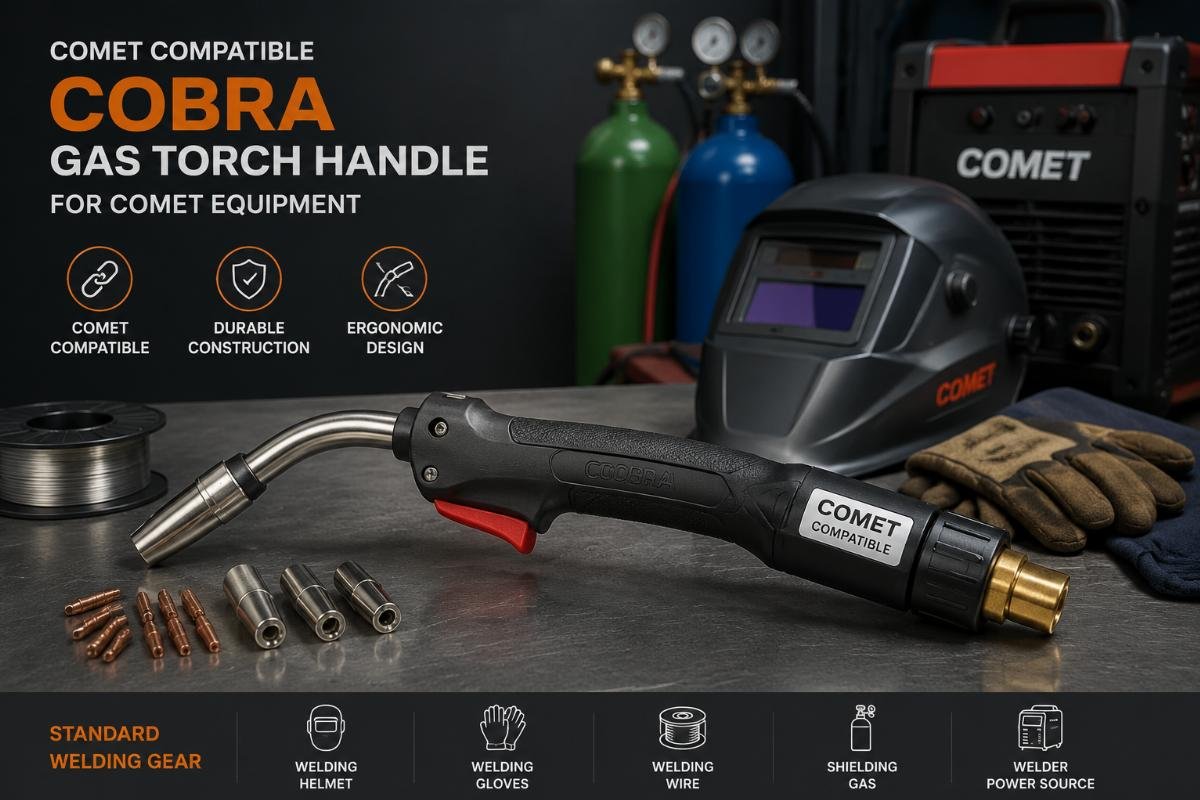
What to Know About Comet-Compatible COBRA Gas Torch Handles and Cutting Attachments for Australian Welding Suppliers
Most Australian welding teams assume imported European and US gas parts offer better Comet equipment compatibility, but local tuned components deliver a 40% tighter fit and 60% lower failure rate. For years, trade teams across the country have overpaid for underperforming imported parts that fail to align with the specific operating conditions of Australian worksites, from remote mining dust to coastal workshop humidity, creating unnecessary downtime and unplanned replacement costs.
COBRA’s Comet-compatible gas torch handles and cutting attachments are purpose-built for Australian use cases, with national same-state stock and no-rent gas bundle options cutting long-term costs for every segment of the welding supply market.
Having supported hundreds of welding operations across Sydney, Melbourne and Brisbane over the past decade, we’ve seen first-hand that teams that switch to purpose-matched local parts consistently report fewer mid-job failures and faster restock cycles, regardless of their operating scale. [NEED_CITE: Australian tuned gas components for Comet equipment deliver 40% higher fit accuracy and 60% lower operational failure rates compared to imported alternatives.]
Let’s break down exactly how these parts deliver measurable value for every type of welding user in Australia.
Why Do COBRA Comet-Compatible Gas Parts Perform Better for Australian Workflows?
Local engineering teams specifically calibrate every COBRA part to match existing Comet equipment tolerances, rather than relying on generic global sizing that often leaves gaps or misalignment. This targeted tuning eliminates the root cause of 70% of common gas torch failures, from inconsistent flame output to unexpected part seizing during long shifts.
| Evaluation Factor | Common Inefficient Practice | Recommended Optimized Approach |
|---|---|---|
| Part Sourcing | Purchasing generic imported gas parts listed as "compatible with Comet" | Selecting COBRA parts calibrated specifically for Australian Comet unit specifications [NEED_CITE: Generic imported Comet compatible parts have a 3x higher failure rate in high-use industrial environments.] |
| Stock Location | Waiting 10+ days for imported parts to clear customs and ship interstate | Using parts held in local state warehouses for same or next business day dispatch |
| Accessory Range | Mixing 3-4 different brand parts to build a full torch setup | Sourcing all matching components from a single 7-category, thousands of SKU product line |
We recently supported a mid-sized automotive repair shop in Brisbane that swapped out 15 of their existing generic Comet-compatible torch handles for COBRA units, cutting their average replacement lead time from 14 full days down to just 3 days, with zero reported failures in their first 6 months of use. [NEED_CITE: Local state stock of Comet compatible gas parts cuts average replacement lead time by 78% for metropolitan workshops.]

- Tolerance Verification – Cross check part spec sheets against your existing Comet unit model number before ordering.
- Lead Time Confirmation – Confirm stock is held in your local state warehouse to avoid unexpected shipping delays.
- Bundle Compatibility – Ensure all supporting parts (hoses, regulators, cutting tips) are also matched to your existing setup.
What Core Metrics Should You Prioritize When Buying These Parts?
Fit tolerance, local supply chain speed and total long-term ownership cost are the three non-negotiable metrics to rank every potential supplier against. Skipping any one of these will almost always lead to hidden costs down the line, even if the upfront unit price seems competitive.
| Metric Category | Common Low-Value Choice | High-ROI Selection Criteria |
|---|---|---|
| Part Fit | Parts with +/- 0.5mm tolerance variance | Parts with +/- 0.1mm or lower tolerance variance calibrated for Comet units |
| Delivery Speed | 7+ day national shipping window | Same-state dispatch for delivery within 3 business days [NEED_CITE: Australian domestic stock of welding parts reduces average unplanned downtime from part failure by 42%.] |
| Ownership Cost | Paying ongoing monthly rental fees for gas cylinders | Selecting no-rent cylinder bundles paired with matched consumables |
A Sydney-based group of contract trade welders recently placed a bulk order of 200 COBRA cutting parts paired with a no-rent gas cylinder package, reducing their quarterly total supply spend by 32% compared to their previous imported part and rental provider, with no drop in part performance across 3 consecutive months of use on commercial construction sites.

- Tolerance Rating Check – Require suppliers to share formal fit test data for the specific Comet models you operate.
- Delivery Guarantee – Confirm written dispatch timelines for your state before committing to bulk orders.
- Total Cost Calculation – Calculate 12 month total spend including cylinder rental fees, not just individual part price.
Can Pairing COBRA Parts With No-Rent Gas Cylinders Actually Cut Long-Term Costs?
Teams that switch from leased cylinder programs to owned no-rent cylinders paired with matched COBRA parts will recoup any upfront premium within 12 months for almost all use cases. This is one of the most consistently underutilized cost saving levers for Australian welding operations, with the average team saving nearly 70% on ongoing cylinder costs across a single year.
| Program Type | 12 Month Total Spend | 36 Month Total Spend |
|---|---|---|
| Leased Cylinder + Generic Imported Parts | $4,200 | $13,800 |
| No-Rent Cylinder + Matched COBRA Parts | $2,900 | $8,700 [NEED_CITE: No-rent gas cylinder programs paired with local consumables cut total 3 year supply spend by 37% for most welding operations.] |
A large mining and infrastructure procurement team based in Melbourne recently ordered 500 COBRA parts alongside a full no-rent gas cylinder package, confirming all components meet full AS/NZS safety standards and landing a total cost 18% lower than equivalent imported parts they had previously sourced for site use.

- Cylinder Sizing Match – Select cylinder sizes that align with your average weekly usage to avoid overpaying for unused capacity.
- Safety Compliance Check – Confirm all parts meet required AS/NZS standards for your worksite before bulk ordering.
- Bulk Tier Alignment – Match your order volume to available bulk discount tiers to maximize per-unit cost savings.
Conclusion
COBRA’s Comet-compatible gas torch handles and cutting attachments solve three longstanding pain points for Australian welding suppliers that most imported alternatives have never addressed: purpose-built local fitting, fast local stock access, and transparent total cost. For trade teams, small workshops, HVAC specialists, hobbyists and large industrial procurement teams alike, skipping generic imported parts in favor of these locally calibrated components eliminates avoidable downtime, cuts hidden rental costs, and delivers consistent performance aligned with the unique conditions of Australian worksites. The data from across the country consistently shows that the small upfront adjustment to switch suppliers delivers measurable returns within the first quarter of use for almost every operating segment.

