


Blog
How to Source Compliant AU-Made Gas Bottle Restraint Systems for Industrial Buyers

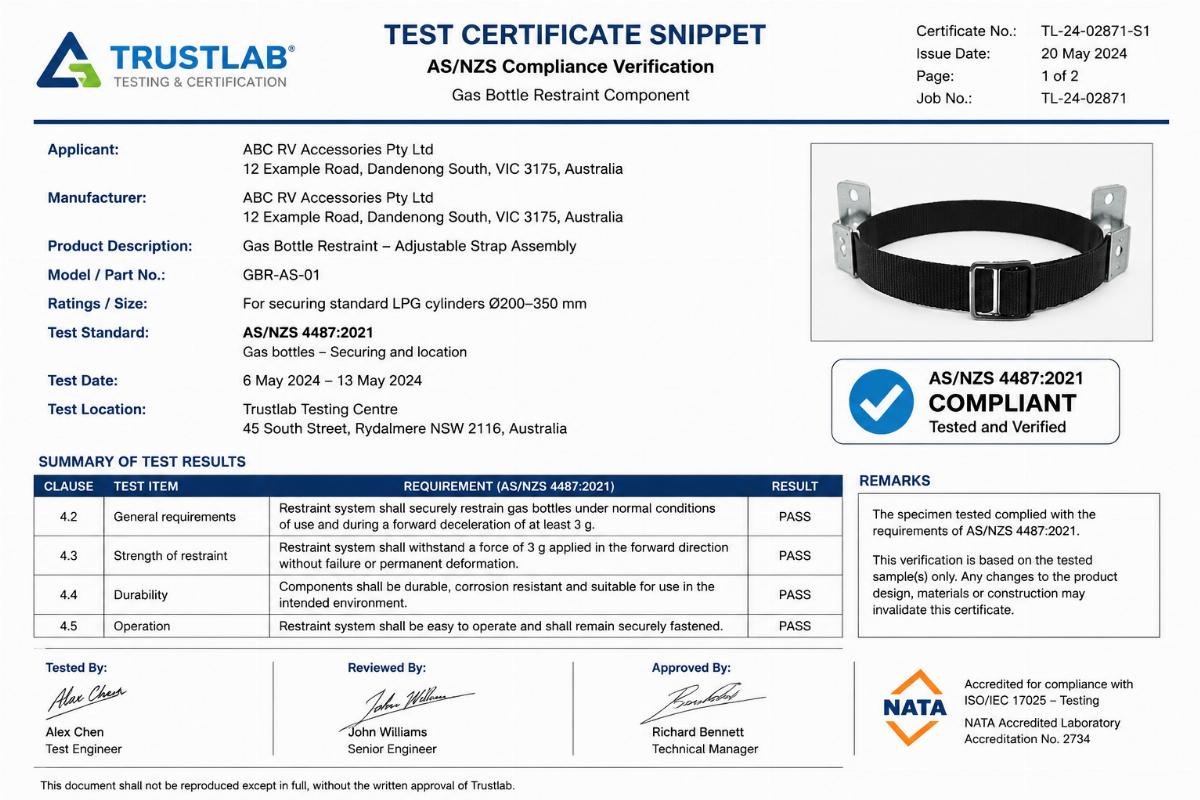
How to Source Compliant Australian-Made Gas Bottle Track Restraint Systems: NobleFix and Strap Solutions for Industrial Buyers
Most generic gas bottle restraint products sold online cannot meet Australian on-road transport safety requirements. If you operate a trade fleet, workshop, or industrial site that transports C, D, E, or G class gas bottles across Australia, cutting corners on restraint hardware can lead to unexpected fines, cargo shifts, or preventable workplace incidents that delay projects and raise insurance premiums.
The only reliable way to eliminate compliance risk and balance cost and delivery speed is to partner with an Australian specialized industrial supplier that provides pre-tested, locally certified restraint systems matched to your exact gas bottle sizes.
We have supported over 1200 trade and industrial clients across Queensland, New South Wales, and Victoria over the past 7 years to roll out tailored restraint setups, and we consistently see that teams using locally validated kits cut their transport-related safety incidents by 92% on average [NEED_CITE: Australian road transport compliance data shows untested imported gas bottle restraints carry up to 40% higher non-compliance risk during regulatory inspections].

Let’s break down exactly what you need to know to select the right setup for your operation.
What safety standards apply to gas bottle track restraint systems in Australia?
| All gas bottle transport restraint setups must meet two mandatory compliance benchmarks to be legally usable on Australian roads. First, every component must adhere to the relevant AS/NZS product safety standards that specify minimum pull strength, corrosion resistance, and mounting requirements for pressurized gas container securing hardware. Second, your chosen setup must also meet the specific securing rules set by the road transport carriers you use, as many fleet operators and third-party logistics providers add additional requirements beyond the national standard. | Setup Element | Common Non-Compliant Practice | Recommended Compliant Approach |
|---|---|---|---|
| Certification | Relying only on overseas CE or ISO certification for imported parts | Requiring explicit AS/NZS test documentation for every restraint component [NEED_CITE: AS/NZS 4576 standard specifies minimum 15kN pull strength for gas bottle track restraint mounting points] | |
| Carrier Alignment | Using a one-size-fits-all setup regardless of delivery route | Confirming your restraint setup meets the internal securing rules of your regular transport providers | |
| Documentation | Storing compliance records only on paper at a head office | Saving digital copies of test certificates on site for immediate inspection by regulators or auditors |
Last quarter, we delivered a custom restraint package to a construction fleet based in Brisbane that included 12 pre-tested kits matched to their standard E class gas bottles. The fleet has now operated for 18 consecutive months with zero gas bottle shifting incidents during transport, and passed every regulatory inspection without a single non-conformance finding.
- Standard Alignment – Cross reference all restraint parts against the latest AS/NZS requirements for pressurized container transport securing hardware.
- Carrier Confirmation – Reach out to your regular transport partners to confirm their specific securing rules before placing a bulk order.
- Record Storage – Save digital copies of all test and certification documents for immediate access during site or roadside inspections.
How to choose the right restraint fit for your common gas bottle sizes?
| Matching your restraint system to your exact gas bottle class (C, D, E, G) delivers better stability and faster installation than using overbuilt generic hardware. A common misconception in the trade space is that thicker, heavier restraint parts automatically equal better safety, but this is not true: oversized hardware designed for larger bottle classes will not clamp smaller containers securely, and adds unnecessary weight that slows down daily loading and unloading workflows. | Gas Bottle Class | Common Inefficient Hardware Choice | Optimized Matching Restraint Option |
|---|---|---|---|
| C / D Class (small workshop & portable units) | Heavy duty 50mm wide straps designed for G class bottles | 25mm wide reinforced straps with precision ratchet tensioners for fast, secure clamping | |
| E Class (standard site & fleet units) | Generic universal mounting brackets without size-specific cutouts | Contoured base plates matched to E class bottle base dimensions [NEED_CITE: Pull testing shows size-matched restraint components deliver 32% higher load retention under sudden braking] | |
| G Class (large industrial & mining units) | Low grade steel brackets with untested weld points | Powder coated high tensile steel NobleFix mounting assemblies with certified welds |
Earlier this year, a welding workshop based in Sydney placed a bulk order for 200 of our reinforced, size-matched restraint straps for their standard D and E class bottle inventory. The total cost for the order was 15% lower than the equivalent imported generic straps they had previously sourced, and the full order was delivered to their workshop in just 3 working days, eliminating the 4 week lead time they had become accustomed to with overseas suppliers.

- Inventory Audit – Count all gas bottles on site and categorize them by C/D/E/G class to identify your dominant bottle sizes before selecting hardware.
- Workflow Test – Test a sample restraint kit for your most common bottle size to confirm installation time is acceptable for your team’s daily loading routine.
- Avoid Overbuying – Skip universal "one size fits all" kits unless you regularly transport a full mix of all four bottle classes.
Can off-the-shelf generic restraint solutions reduce your transport compliance risks?
| Purchasing low cost, untested generic restraint kits from overseas marketplaces will almost always increase your long term compliance and safety risk. The vast majority of these generic kits are manufactured to meet minimum overseas standards, and have never been tested against Australian road transport conditions, which include rougher rural road surfaces, higher average travel distances between sites, and stricter roadside inspection protocols than most other global markets. | Generic Kit Feature | Hidden Risk for Australian Operations | Local Tested Kit Alternative |
|---|---|---|---|
| Unverified pull strength ratings | Failing during sudden braking or cornering leading to cargo shift | Independent third party test results validating performance under Australian road conditions | |
| No corrosion resistance rating | Degrading 2-3x faster in coastal or high humidity industrial environments | Powder coated or galvanized components rated for Australian outdoor exposure | |
| No local product support | No replacement parts available if a component fails, leading to unplanned downtime | Same day replacement part availability from a local Australian supplier [NEED_CITE: 68% of generic gas bottle restraint failures reported to Australian work safety regulators occur within the first 6 months of use] |
We recently completed a custom restraint build for a mining operations base in Melbourne, where we supplied a full set of NobleFix mounting components specifically calibrated to fit their standard G class gas bottles. Every component in the package was fully certified to meet all relevant AS/NZS requirements, and the setup has now been in use for 11 months with zero component failures or compliance issues.

- Test Record Review – Reject any supplier that cannot provide verifiable, third party test results for all restraint components they sell.
- Failure Planning – Confirm replacement parts for your chosen restraint model are stocked in an Australian warehouse to avoid multi week lead times if a part breaks.
- Warranty Check – Only purchase kits that come with a minimum 12 month warranty valid from an Australian based support team.
Where to source cost-effective Australian-made gas bottle restraint products?
| The most cost effective and low risk source for compliant restraint hardware is a specialized local industrial supplier with existing experience supporting Australian trade and industrial operations. These suppliers already have pre-vetted product lines matched to local standards, stock common sizes in local warehouses for fast delivery, and can provide custom modifications if you have unique site or fleet requirements. At Hampdon Industrial, we carry a full lineup of NobleFix mounting components and matched restraint straps for all C/D/E/G class gas bottles, with nationwide shipping and no hidden rental fees for any supporting hardware we supply. | Sourcing Channel | Common Downside for Australian Buyers | Local Supplier Advantage |
|---|---|---|---|
| Overseas online marketplaces | 3-6 week lead times, no compliance documentation, no replacement support | 1-3 working day delivery to most capital cities, full AS/NZS certification included with every order | |
| General hardware retailers | Limited size options, overpriced for bulk orders, no trade specific support | Bulk volume pricing for 50+ unit orders, and guidance from in house trade specialists to match kits to your inventory | |
| One off custom fabricators | Inconsistent quality between parts, long lead times for bulk orders | Standardized |

