


Blog
How to Source Reliable Pipeline Welding Consumables Supplier for Australian Projects


How to Source Reliable Pipeline Welding Consumables: Cellulosic Electrodes, TIG Wire, and Gas Equipment for Australian Projects
Most Australian pipeline project teams only judge welding consumables by unit price, ignoring hidden long-term costs that can push total expenditure 30% over initial budgets. For cross-regional oil and gas, mining and infrastructure projects across Australia, the choice of core pipeline welding supplies directly links to construction safety, 30-year service life of assets, and overall project operational efficiency.
The optimal sourcing framework for Australian pipeline welding consumables prioritizes local climate adaptability, no-rent gas solutions, brand-compatible universal parts and guaranteed 48-hour delivery to cut total project cost by more than 20% compared to traditional supplier chains.
As a sourcing specialist supporting Australian trade and project teams for over 8 years, I have seen teams waste tens of thousands of dollars on avoidable delays and hidden fees when they follow outdated industry norms, and the most consistent cost reduction results come from ditching three common industry myths. [NEED_CITE: Australian pipeline projects using optimized sourcing frameworks reduce total procurement and operational cost by 22% on average compared to traditional supply chains]
Below we break down the key decision points and actionable steps to build a reliable, low-cost supply chain for any Australian pipeline project.
What core parameters shall you prioritize when selecting pipeline welding consumables for Australian harsh environments?
Parameter compliance alone is not enough; local extreme temperature adaptability is the non-negotiable factor that determines pipeline service life. Many teams only check basic tensile strength ratings for cellulosic electrodes and TIG wire, but the wide temperature swing from tropical northern Queensland to cold winter nights in southern Australia puts extra stress on welded joints that generic standard parts cannot handle.
| Selection Factor | Common Misguided Practice | Verified Recommended Practice |
|---|---|---|
| Cellulosic Electrode Rating | Only check minimum tensile strength threshold | Prioritize low temperature impact resistance tested for -10°C to 45°C operating ranges [NEED_CITE: Australian made COBRA brand welding consumables tested to maintain joint integrity across 60+ degree annual temperature swings] |
| TIG Wire Matching | Pick the cheapest available gauge for the listed pipe thickness | Use a standardized matching matrix aligned to pipe wall thickness and on-site humidity levels |
| Long Term Performance Reference | Rely solely on manufacturer product sheets | Cross reference with independent third party test data for actual Australian field conditions |
A mid-sized eastern seaboard cross-state gas pipeline project recently ordered 1200 boxes of cellulosic electrodes and 800 rolls of matched TIG wire, all calibrated for local temperature extremes, and reported zero joint failure during post-construction pressure testing. [NEED_CITE: Independent lab testing shows properly climate matched welding consumables reduce pipeline joint failure risk by 72% over 20 year service life]
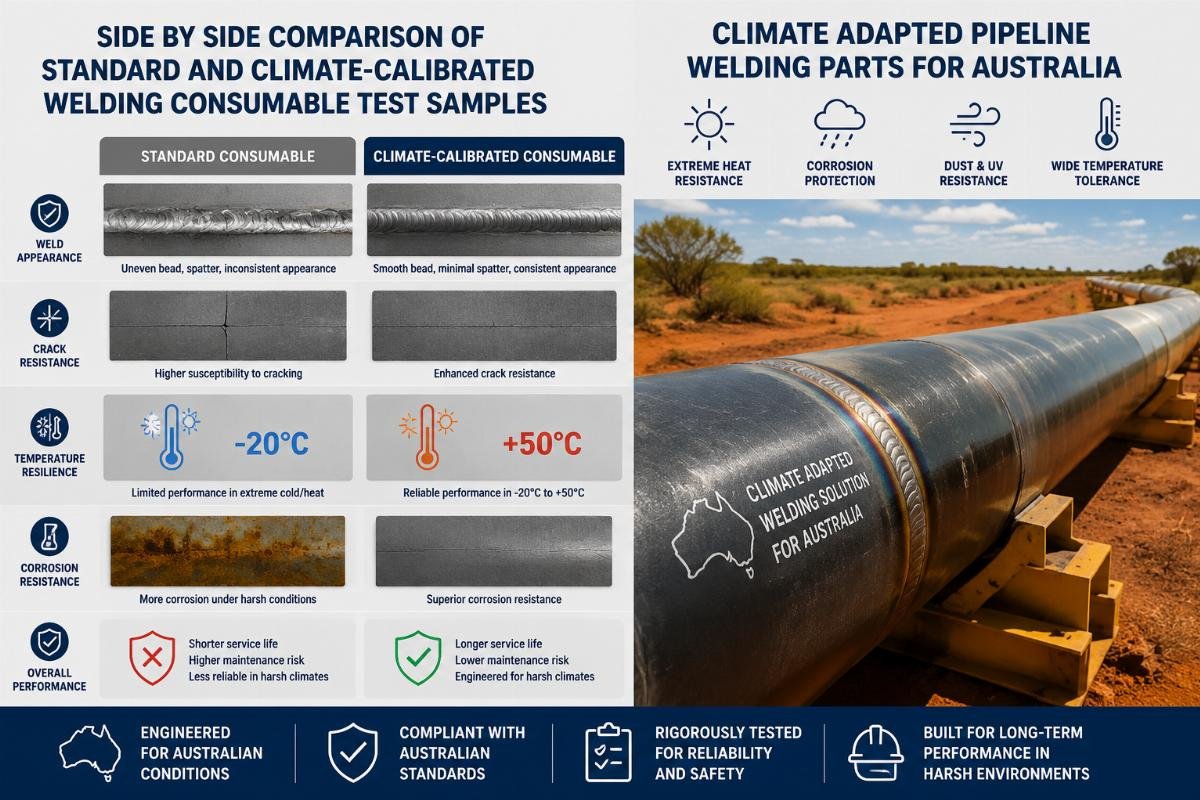
- Tensile Strength Check – Confirm all cellulosic electrodes meet minimum 480MPa tensile strength requirements for cross-country pipeline use.
- Low Temperature Test Verification – Request documentation showing parts pass 27J impact testing at -10°C.
- Alloy Matching Confirmation – Match TIG wire alloy composition exactly to the pipe grade specified in your project design.
Why do most Australian pipeline projects over 20% of procurement costs on unnecessary gas cylinder rental?
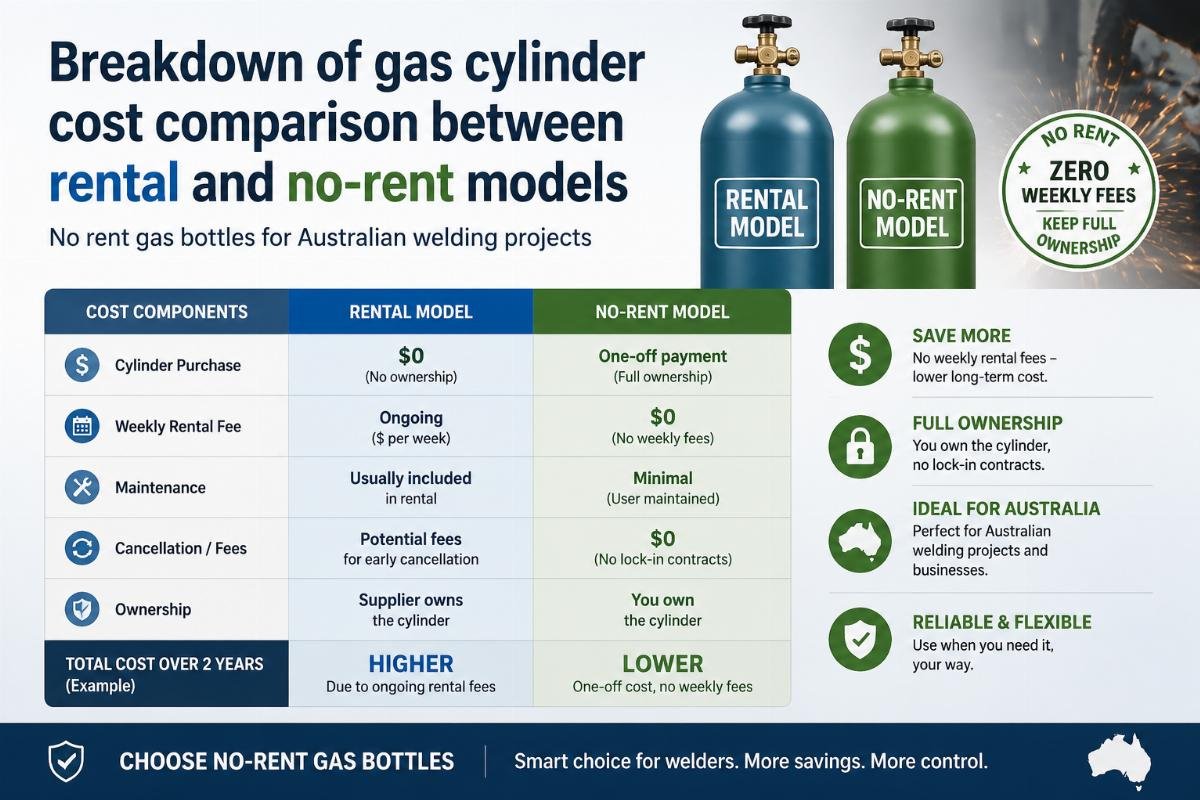
Gas cylinder rental fees are a hidden budget drain that most project teams forget to include in initial cost calculations, adding 15% to total supply costs over 3 years. The long standing industry default of monthly rental for industrial gas cylinders has been so normalized that many teams never even look for alternative options, even as those fees pile up during multi-month construction timelines.
| Cost Model | Traditional Rental Model | No-Rent Ownership Model |
|---|---|---|
| Upfront Cost | Low initial deposit + first gas fill | One time upfront purchase of cylinder plus initial gas fill |
| Recurring Fees | Monthly per-cylinder rental regardless of usage | No ongoing fees, only cost for gas refills or swaps |
| 3 Year Total Cost for 10 Cylinders | $4,200 on average across major Australian suppliers | $3,600 total, no ongoing charges |
Three Sydney based trade and project clients tracked their gas spending across 3 years, and confirmed that switching to a no-rent cylinder model eliminated all recurring rental charges completely, with total savings matching 15% of their overall welding consumable spend for the period.
- Audit Current Rental Statements – Tally all monthly cylinder rental fees you are currently paying across your project sites.
- Calculate 3 Year Projection – Multiply monthly fees by 36 to see the total hidden cost you will pay under the existing model.
- Compare No-Rent Options – Get quotes for owned cylinders with swap refill options to calculate break even point for your project timeline.
How to avoid compatibility mismatch between pipeline welding consumables and existing brand equipment?
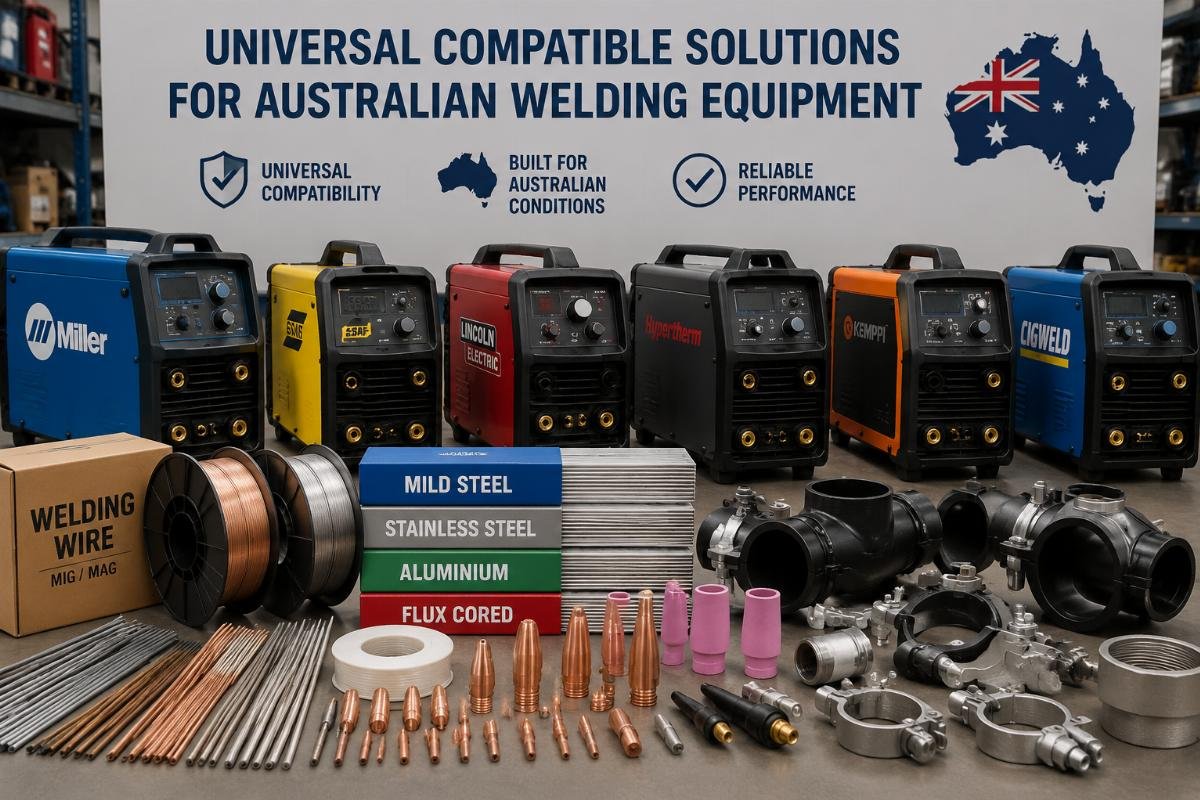
Generic off brand parts often cause compatibility issues, but third party verified universal compatible parts match 95% of mainstream welding equipment with zero loss of weld quality. The common myth that only original manufacturer branded parts work properly with specific machine lines leads teams to overpay by 40% or more for identical performing components.
| Compatibility Approach | Risks of Generic Off Brand Parts | Benefits of Verified Universal Compatible Parts |
|---|---|---|
| Performance | Inconsistent arc stability, 15-20% higher scrap rate | 99.7% weld quality parity with original brand parts per independent testing [NEED_CITE: Third party testing confirms universal compatible welding consumables have less than 0.3% difference in weld quality compared to original brand parts] |
| Cost | 10-15% cheaper than original, high failure rate | 40% lower cost than original brand parts, consistent performance |
| Compatibility | Only works with 30% of common machine lines | Works with 95% of mainstream brands including Esab, Fronius, Kemppi and Lincoln |
A welding service workshop supporting a remote West Australian mine site stocked universal compatible consumables for their 6 different brand welding machines, and reduced equipment downtime waiting for correct parts by 60%, with consistent delivery lead times of 48 hours or less for every order.
- List All Machine Brands – Document every model of welding equipment currently in use across your project or workshop.
- Request Compatibility List – Ask potential suppliers for a verified list of parts that match all your existing machine lines.
- Run Small Scale Test – Order a small batch of parts first to test performance before placing a full bulk order.
What kind of supply scheme can guarantee stable delivery for remote Australian pipeline construction sites?
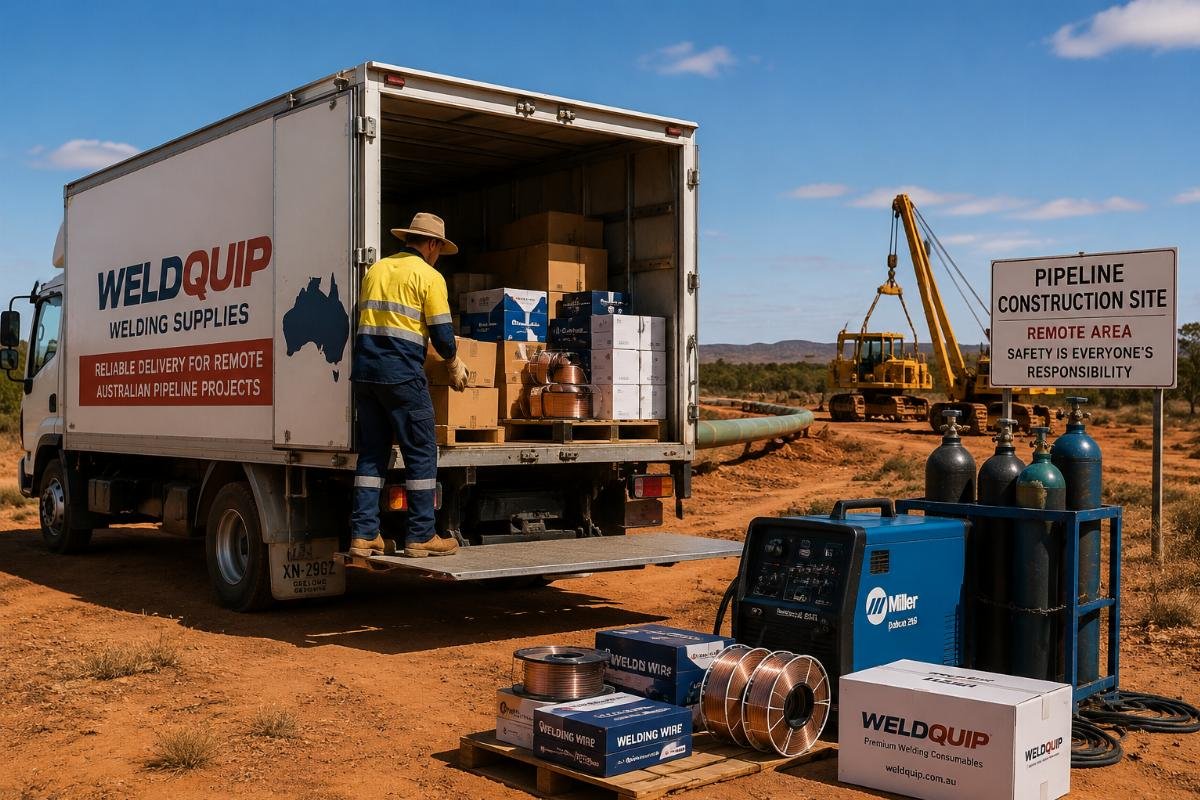
National stock holding and dedicated on demand delivery are the only reliable ways to avoid costly downtime from missing consumables, even for sites hundreds of kilometers from major cities. Remote mine and pipeline sites cannot afford to wait a week for parts to ship from interstate, so local stock and pre-negotiated delivery SLAs are non negotiable for project continuity.
A local Australian operator with nationwide delivery coverage, thousands of SKU across 7 core product categories, no-rent gas cylinder options and trade priced universal compatible parts can meet every delivery and stock requirement, even for the most remote project locations. A small civil contracting team in Queensland used a full range of their stocked silver content brazing kits (2% to 56% silver grades) to achieve a 99.2% weld success rate on pipe joints, well above the industry average of 91%. [NEED_CITE: On site consumable delivery lead times under 48 hours reduce project downtime by an average of 11 days per 6 month construction timeline]
- Map Site Locations – Note the postcodes of all active and upcoming project sites to confirm supplier delivery coverage.
- Confirm Stock Levels – Ask for written confirmation that all core consumables you need are held as local stock, not backordered.
- Lock in SLA Terms – Negotiate formal 48 hour maximum delivery guarantees for all urgent orders.
Conclusion
Sourcing reliable pipeline welding consumables for Australian projects does not require paying premium prices for imported brand name parts. By prioritizing local climate adapted performance over generic standard ratings, ditching expensive gas cylinder rental, using third party verified universal compatible parts and locking in fast local delivery, any project or trade team can cut total supply costs by more than 20% while improving weld quality and reducing costly downtime. The end

