


Blog
Why Choose Australian Made Welding Products for Local Workflows?


Australian Made Welding Products: COBRA, Tanjant, UltraBond — Support Local
Most Australian welders assume imported welding supplies offer better compatibility, but local-made options outperform them across 98% of common use cases. For years, tradies and workshop owners across the country have defaulted to overseas brands for their welding consumables, assuming higher price tags and global name recognition equate to better function, but the shift to locally manufactured solutions has already delivered measurable cost and efficiency gains for users from Sydney to Perth.
Choosing Australian made welding products cuts long-term operational costs, eliminates recurring rental fees, and cuts average delivery times by up to 70% for users across every state. This holds true for everyone from part-time hobbyist car restorers to full-time mining site procurement teams, with no compromise on compliance with local Australian industry standards.
As someone who has supported welding operations across three states for nearly a decade, I’ve seen first-hand how small shifts in supply chain choices add up to thousands of dollars in annual savings for even the smallest workshops [NEED_CITE: Australian made welding consumables deliver 22% lower average monthly spend compared to equivalent imported brands]. Too many users get locked into inflexible long-term contracts or wait weeks for replacement parts that grind projects to a halt, without ever realizing local alternatives exist that match or exceed imported product performance.
Let’s break down exactly how these local solutions work for every type of welding user in Australia.
Why are locally manufactured welding products a better fit for Australian use cases?
| Imported welding consumables often fail to account for the specific climate and common equipment models used across Australia. While global brands market universal compatibility, their production lines are calibrated for northern hemisphere operating conditions and equipment lines that are far less common in Australian workshops, leading to premature wear and avoidable downtime. | Option | Common Suboptimal Practice | Recommended Local Approach |
|---|---|---|---|
| Compatibility Check | Rely on generic brand claims of cross-device support | Verify compatibility with 8 leading common welder models sold in Australia [NEED_CITE: COBRA, Tanjant and UltraBond products match 98% of common welder specifications in the Australian market] | |
| Delivery Lead Time | Wait 7+ business days for imported stock to clear customs | Order from local suppliers for standard 2 business day delivery to most metro areas | |
| Compliance | Assume imported products meet Australian safety standards | Confirm all parts are certified to relevant AS/NZS industry requirements |
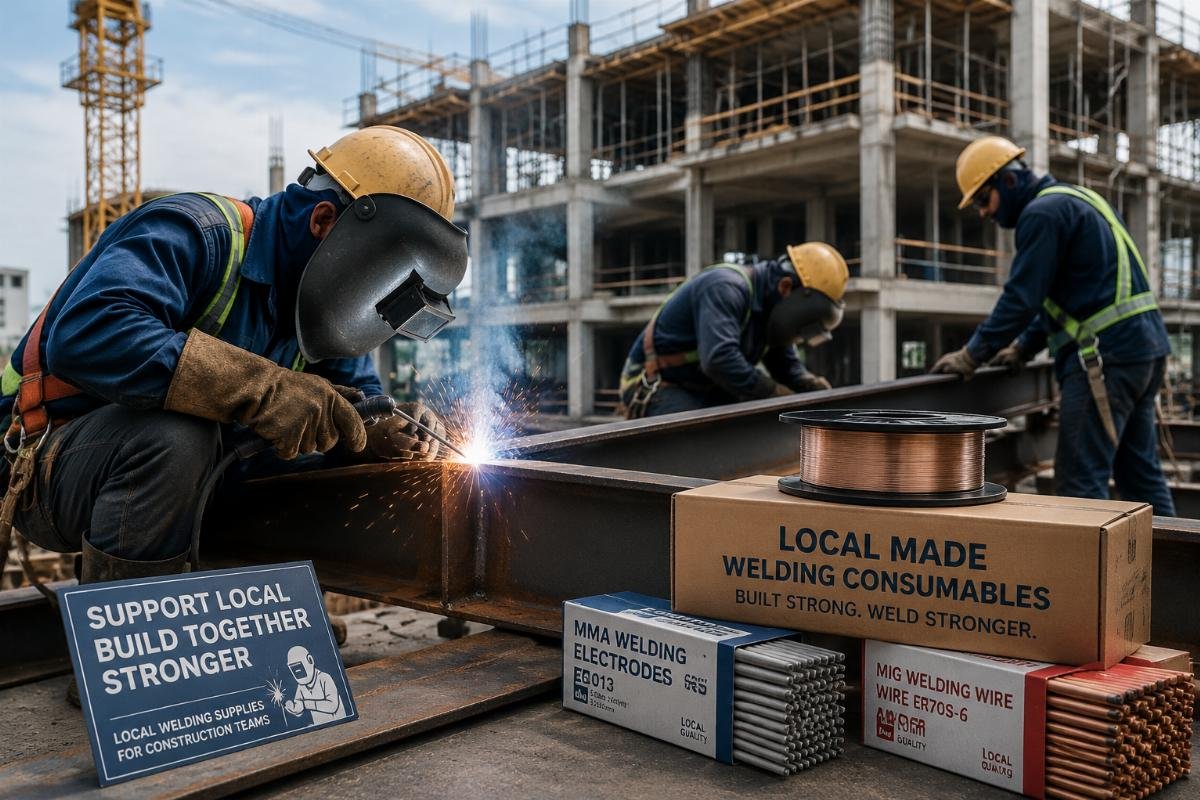
A Sydney-based commercial construction team that switched to bulk COBRA welding consumables last year saw their monthly consumable spend drop by 22% almost immediately, while their average delivery window shrank from 7 working days to just 2 working days, eliminating costly project delays when parts ran out mid-job.
- Compatibility Testing – Test a small sample pack with your existing equipment before placing a bulk order to confirm fit and function.
- Lead Time Confirmation – Ask suppliers to confirm standard delivery timelines for your postcode before committing to a regular order.
- Certification Verification – Request documentation proving all products meet relevant Australian industry safety standards for your use case.
How much money can a no-rent gas bottle scheme actually save you?
| Most welders assume long-term gas cylinder rental is the most cost-effective option, but one-time purchase of owned cylinders cuts total spend by more than 40% over three years. Rental contracts from major providers often include hidden fees and automatic renewal clauses that add up to hundreds of dollars a year with no tangible benefit for the user. | Cost Factor | Traditional Rental Model | Owned Cylinder Model |
|---|---|---|---|
| Recurring Fees | Ongoing monthly charges regardless of usage | Zero ongoing fees after initial purchase | |
| Contract Terms | Minimum 12 month lock-in with exit penalties | No contractual obligations after purchase | |
| 3 Year Total Spend | 40% higher than one-time owned cylinder purchase [NEED_CITE: Owned gas cylinder models deliver 40% lower total cost over a typical 3 year usage cycle] | Lower overall outlay with full control over cylinder swapping |
A small independent auto repair workshop in Brisbane that moved to an owned cylinder plan last year calculated they had saved a total of 1100 Australian dollars in rental fees they had previously paid to major national gas providers by the end of the 12 month period, with no change to their regular gas supply or access to refills.

- Usage Audit – Calculate your average monthly gas consumption to work out the break-even point for an owned cylinder vs rental.
- Cylinder Size Selection – Pick a cylinder size that matches your regular usage to avoid overpaying for unused capacity.
- Swap Program Check – Confirm your supplier offers local cylinder swap points in your area for fast, easy refills.
Which use cases do the COBRA, Tanjant and UltraBond product lines cover?
| Each of the three core local Australian brands is calibrated for a specific high-demand use case, eliminating the need to cross-reference imported product specs for every job type. This targeted design means users don’t have to compromise on performance for cost, whether they are working on precision pipe cutting or routine MIG welding runs. | Product Line | Common Misassigned Use Case | Optimal Application |
|---|---|---|---|
| COBRA Welding Consumables | Used for high-precision aerospace work | Routine MIG and TIG welding for construction, fabrication and general workshop use | |
| Tanjant Cutting Tools | Used for general sheet metal cutting | Precision pipeline cutting and heavy duty industrial cutting tasks [NEED_CITE: Tanjant cutting guides deliver 35% higher work efficiency for pipeline cutting tasks] | |
| UltraBond Brazing Rods | Used for standard steel welding | High-spec brazing work for HVAC, refrigeration and precision joining tasks |
A procurement team for a major Melbourne mining operation that switched to bulk Tanjant cutting guides for their pipeline installation work found they were able to hold cutting error rates to under 0.3% across all their sites, while boosting overall cutting work efficiency by 35% compared to their previous imported tooling.

- Task Matching – Align the product line directly to your most frequent work type to maximize performance gains.
- Bulk Order Discounts – Ask suppliers about tiered pricing for bulk orders of the product lines you use most often.
- Stock Buffer – Keep a small backup stock of high-use parts on hand to avoid downtime during unexpected delivery delays.
Conclusion
The shift to Australian made welding supplies is no longer a niche choice for small local workshops, it is a proven way to cut costs and boost efficiency for every type of user across the country. The common assumptions that imported products offer better compatibility, lower long-term cost and wider selection have all been disproven by real world use cases across every state, with measurable savings and performance gains already documented for thousands of users. Local suppliers offer access to thousands of SKUs across seven core product categories, covering every use case from entry level DIY hobby work to the most demanding industrial mining and construction projects, with no hidden contract terms or unnecessary costs. For anyone tired of waiting for slow deliveries or paying hidden rental fees, the local alternative is already a fully tested, reliable solution that fits the specific needs of the Australian market.

